Using public transportation in Buenos Aires is easier than it seems and can make your trip even better. Besides being the cheapest way to get around the city, taking the subway, bus, or train puts you in direct contact with the daily life of Buenos Aires residents, something no taxi can provide.
Keep reading to learn how each mode of transport works, how to buy and use the SUBE Card, which neighborhoods each line covers, and key practical tips to avoid any unpleasant surprises. Everything you need to know before arriving in the Argentinian capital.
What is the SUBE Card and why will you need it to use public transport in Buenos Aires?
The SUBE (Sistema Único de Boleto Eletrônico) is the mandatory prepaid card for using the subway, buses, and trains in Buenos Aires. Without it, you cannot board, as cash is not accepted on any line in the city.
The card costs around 1,500 Argentine pesos and can be purchased at metro station ticket offices, kiosks (convenience stores scattered throughout the city), post offices, and Tourist Information Centers in neighborhoods such as Recoleta, Palermo, and Calle Florida.
The card comes with no balance; you can top it up instantly at any point of sale. The same SUBE card can be used by more than one person on the metro. It’s worth remembering that, since 2025, buses and the metro have also accepted international credit or debit cards with NFC technology, but SUBE remains the most reliable option.
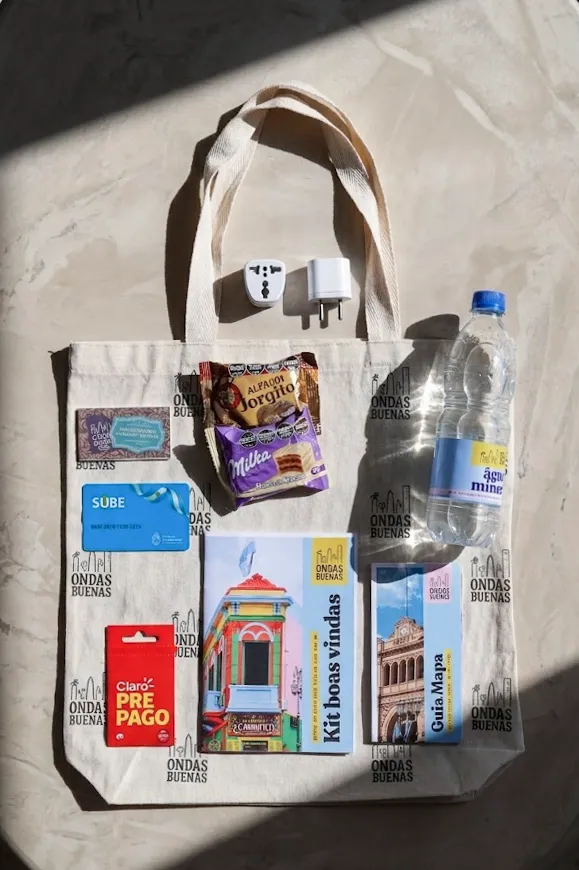
💡 Planning a trip to Buenos Aires? The Ondas Buenas Welcome Kit arrives at your hotel with a loaded SUBE card, activated 5G chip, and complete city guides — everything you need to enjoy the city from the very first minute, without queues or hassles.
How to use the subway (subte) in Buenos Aires
The Buenos Aires metro (called “subte” by locals) was the first in Latin America, inaugurated in 1913. Today it has 6 lines (A, B, C, D, E and H), all converging on the microcenter, where hotels and most tourist attractions are concentrated.
To use it, simply place your SUBE Card on the turnstile and enter. It operates from Monday to Saturday, from 5 am to 11 pm, and on Sundays from 8 am to 10 pm. Avoid peak hours (8 am to 10 am and 5 pm to 7 pm) when the carriages are crowded.
Each line covers different areas of the city. To go to the Casa Rosada and Plaza de Mayo, use Line A. For Calle Florida, use Line B. For San Telmo, use Line C. Recoleta and Palermo are served by Line D. The newer stations have artistic interventions on the walls, a cultural experience in itself.
How to take the bus in Buenos Aires without complications.
Buses (called colectivos or bondis) are the most comprehensive transportation option in the city. With over 180 lines operating 24 hours a day, they reach neighborhoods not served by the metro, such as La Boca and Caminito.
The logic is simple: enter through the front door, tell the driver your destination (there is no fare collector), wait for the fare to be adjusted on the machine, and tap your SUBE card. The fare varies according to distance; most tourist routes are in the cheaper range. At the stops, queuing is the rule and must be respected.
💡 Essential tip: download the BA Cómo Llego app (Android and iOS). It’s the city’s public transport GPS: it shows bus, metro and train routes with estimated arrival times. Or, if you don’t want to download another app on your phone, Google Maps works great to tell you which bus you should get on.
Train in Buenos Aires: the cheapest way to get to Tigre.
Surface trains are the best option for those who want to explore destinations outside the city. The most famous trip is the Retiro–Tigre branch of the Mitre Line, which departs from Retiro station and arrives at the enchanting Tigre Delta in about 1 hour, with a fare of just a few cents, payable with the SUBE Card.
Retiro station is the central rail hub of Buenos Aires, from where all 7 metropolitan train lines depart. Be aware: a single line may have several branches with different destinations, so confirm the correct branch before boarding.
Other ways to get around: bicycle, taxi, and Cabify.
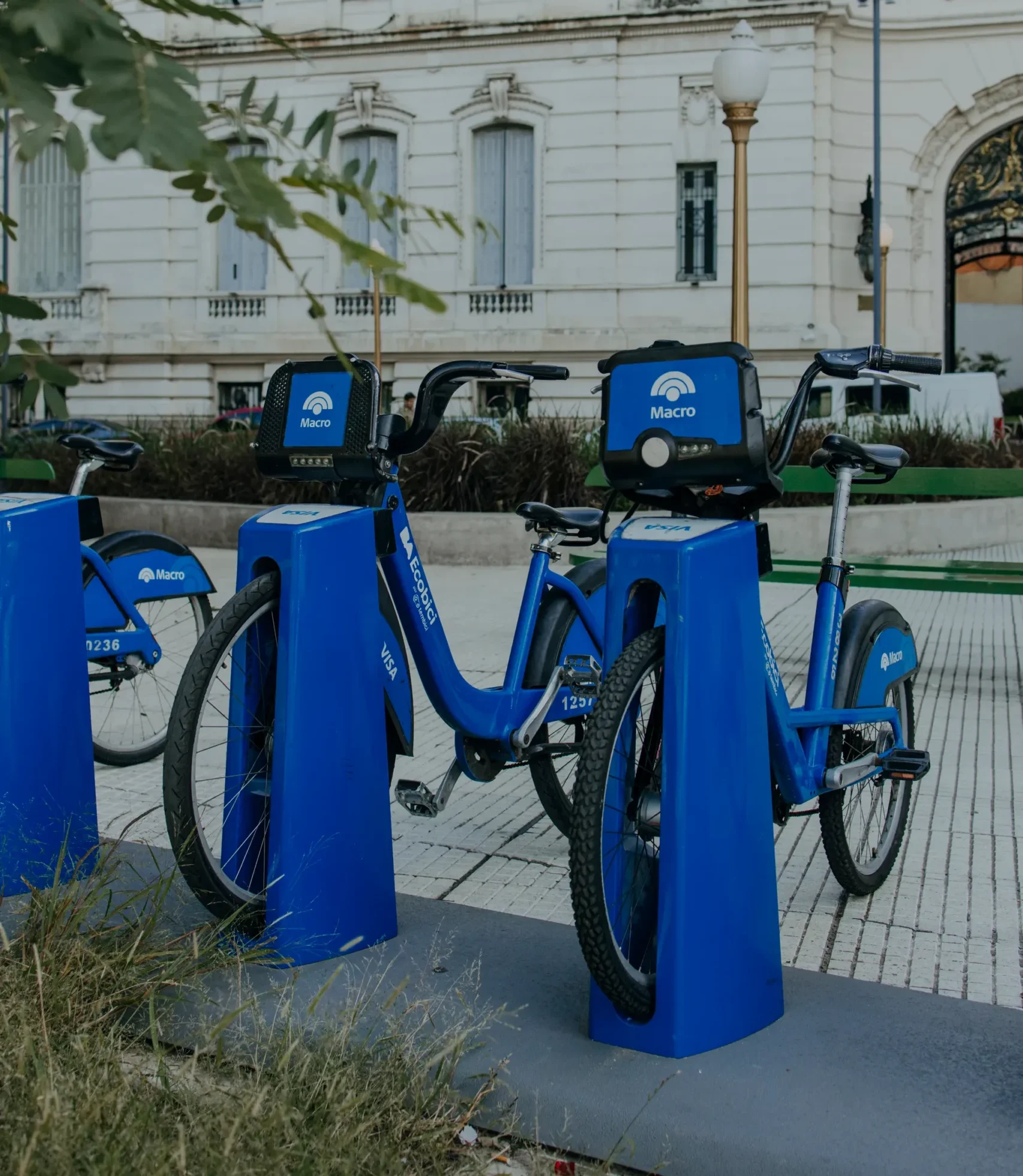
- EcoBici: a free public bicycle system. Download the app, create a user account, and rent a bike. Great for Palermo, Recoleta, and Puerto Madero.
- Taxi: Official taxis are black and yellow and circulate with the word “libre” lit up. Use the BA Taxi app to pay by card and view the driver’s details. Never hail taxis that are stopped; always choose those that are moving. Extend your arm and it will stop. Important: To hail taxis this way, you need to be on the right side of the street or avenue.
- Cabify: the only legal ride-hailing app in Buenos Aires. Uber operates illegally in the city.
Frequently asked questions about transportation in Buenos Aires
Do I need the SUBE Card even if I’m only staying in Buenos Aires for a few days?
Yes. It’s mandatory for subway, bus, and train. Since 2025, international NFC cards have also been accepted, but SUBE is still safer and more economical.
Does the metro reach La Boca and Caminito?
No. These neighborhoods don’t have a nearby metro station. The bus is the best option to get there; use the BA Cómo Llego app to find the right line.
How to get from Buenos Aires to Tigre by train?
Take the train from Retiro station, Mitre Line, Retiro–Tigre branch. The trip takes 1 hour and is paid for with the SUBE Card. It’s one of the most charming day trips from Buenos Aires.
Do buses run overnight in Buenos Aires?
Yes, buses operate 24 hours a day, with reduced frequency after 11 pm. The metro closes between 10 pm and 11:30 pm, depending on the line and day of the week.
Does the SUBE Card work outside of Buenos Aires?
Yes. The SUBE card is valid in over 60 Argentinian cities, including Bariloche, Mendoza, and Ushuaia. It’s worth keeping it loaded if you plan on exploring the country beyond the capital.
Traveling to Buenos Aires? We’ll take care of everything for you!
With the Ondas Buenas Welcome Kit, you’ll arrive in Buenos Aires with a loaded SUBE card, activated 5G SIM card, city map divided by zones, a 4-day itinerary guide, and much more. Everything delivered to your hotel or Airbnb as soon as you arrive!
In addition to the kit, we offer:
- Transfer in/out: comfortable and punctual airport transfer to your hotel (and back).
- Personalized assistance: a complete consultation with itinerary guidance, safety tips, currency exchange, restaurants, and much more — with a 4GB SIM card and SUBE with extra credit.
Want more tips like this before you embark on your journey? Follow Ondas Buenas on Instagram.